Trucker's Hitch - How to Apply Tension Like a Pro
This is an exceedingly useful knot! I find myself using this almost every day and I love discovering more uses for this mechanical advantage monster!
The Trucker's Hitch is a compound knot commonly used to secure loads on trucks, trailers, and boats. However, its ability to create mechanical advantage and high tension makes it a valuable knot for various electrical applications as well, particularly when working with switchgear or heavy panels, securing and molding heavy cables, or creating tensioning systems.
At its core, the Trucker's Hitch allows you to create a mechanical advantage, essentially "multiplying" your pulling force. This is achieved through a pulley-like action created by an initial loop in the rope. The working end of the rope is then passed through this loop and secured, allowing for significant tension to be applied to the main line.
For electrical work, choosing the right initial loop is crucial. Many Trucker's Hitch videos and tutorials tie this loop with either a slip knot or a bight secured with a series of half hitches. Neither of these methods is practical for us in the Electrical and Construction trades. As soon as you remove tension, these knots fall apart. We need our loops to be strong, stable, and reusable, but still easy to untie. The Span Loop and the Bowline In a Bight are excellent choices because they create strong, non-tightening loops that can be easily undone without damaging the rope.
Tips for a Better Trucker's Hitch
Mind Your Rope Length: Because this system creates mechanical advantage, you will pull significantly more "working end" through the loop than the midline knot actually moves. Ensure you have enough lead before you start.
Fight Friction: Theoretically, this setup provides a 3:1 purchase, but real-world friction at the pivot and the midline loop "pulley" will reduce your actual power.
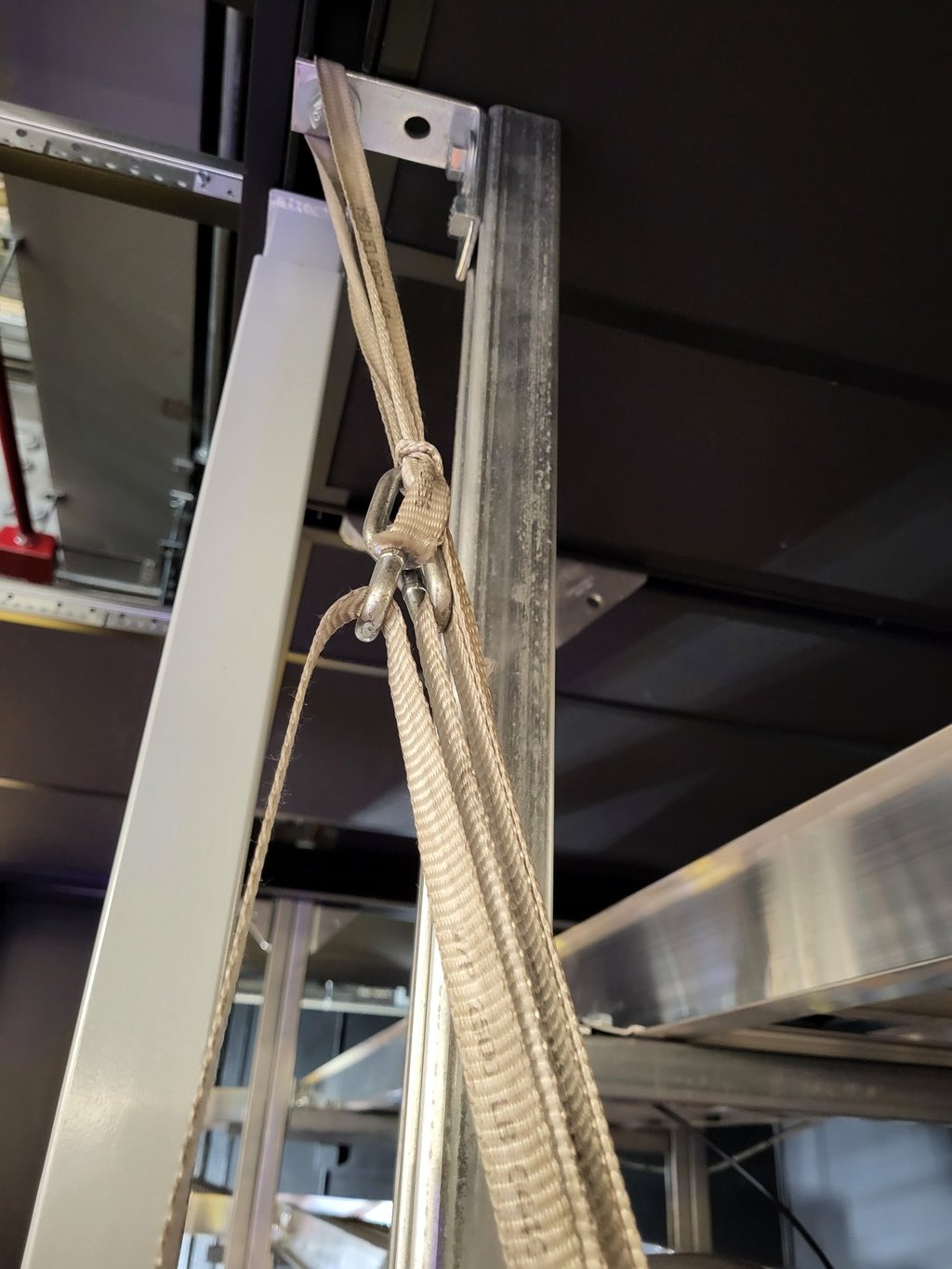
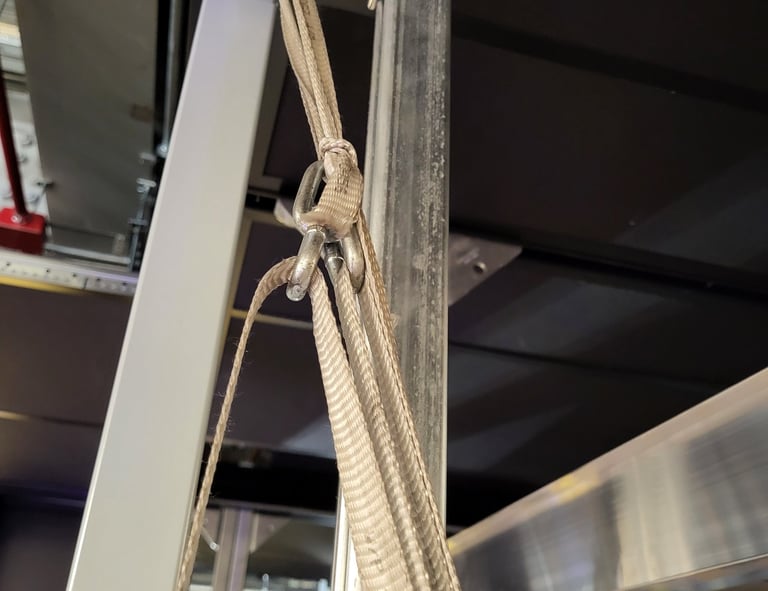
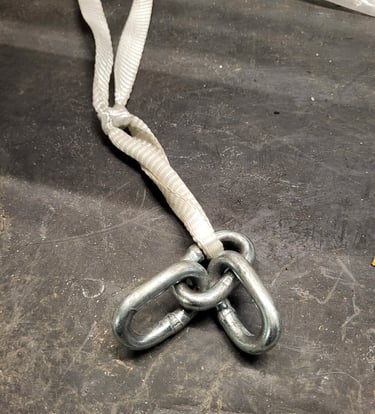
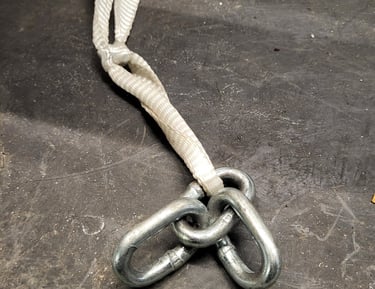
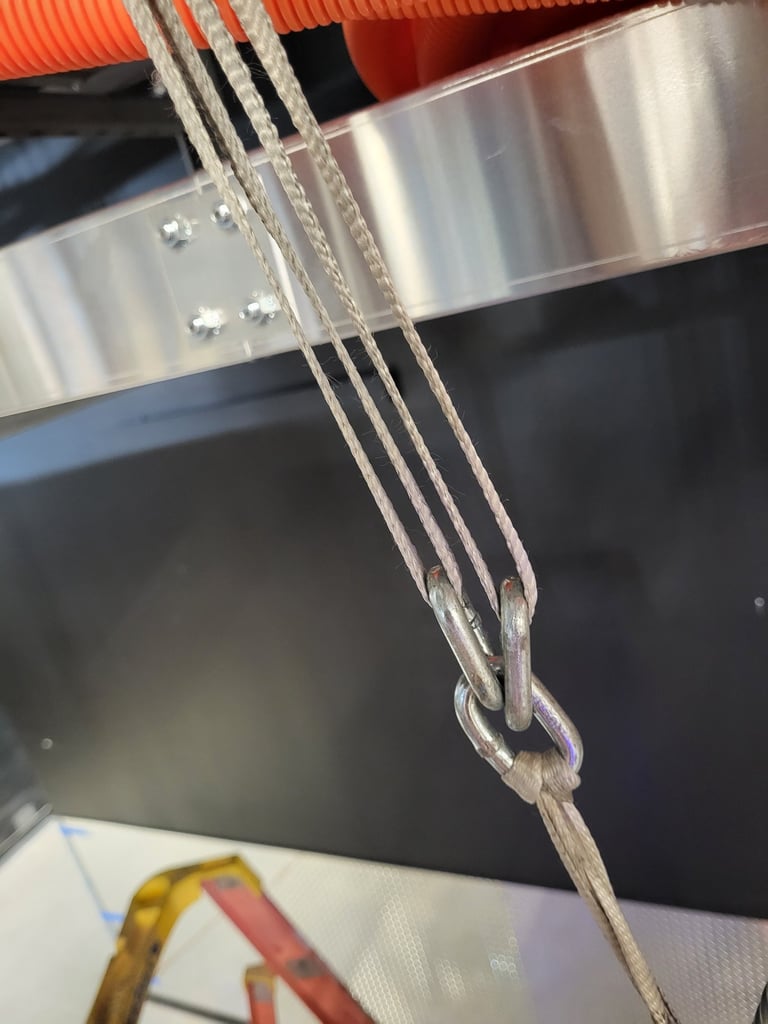
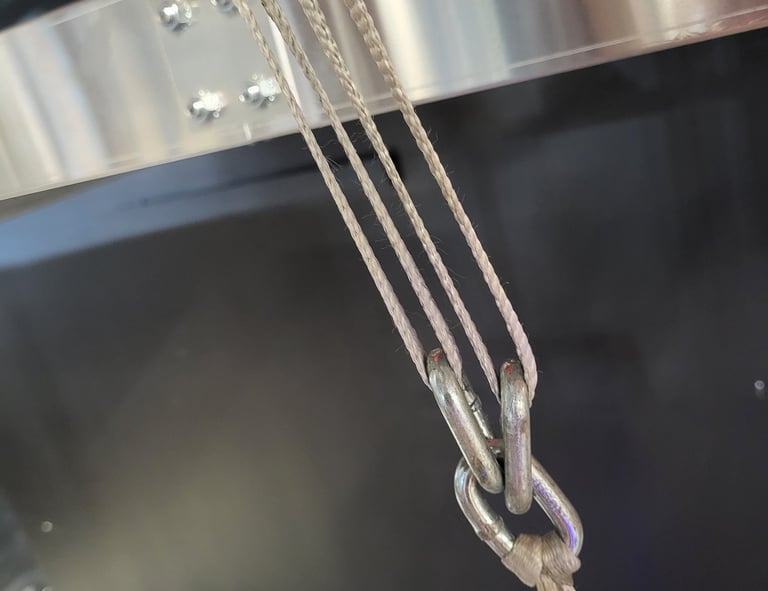
Use Smooth Pivots: Always choose a smooth structural element for your pivot. If the surface is rough, tie in a smooth shackle, a chain link, or even a closed lock to pass the rope through. This drastically increases your pulling power.
Scalability: You can scale this into a "block and tackle" style system for massive loads by using short sections of chain (3-link sections work best) to act as smooth attachment points, though this requires keeping friction to an absolute minimum to be effective.
Avoid "Auto-Locking" Gimmicks: Skip the variations that claim to be "self-locking" by making extra passes through the midline loop. They rarely hold without a tie-off and create so much friction that they kill your mechanical advantage. Stick to a standard lock-off with Half Hitches.
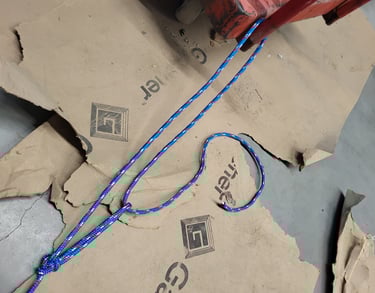
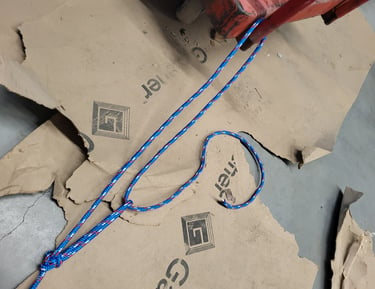
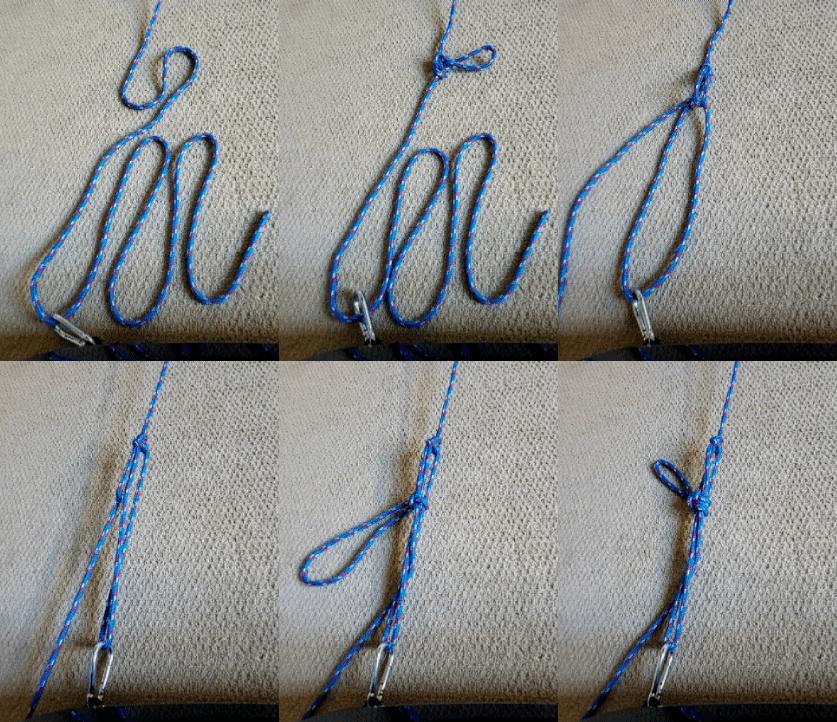
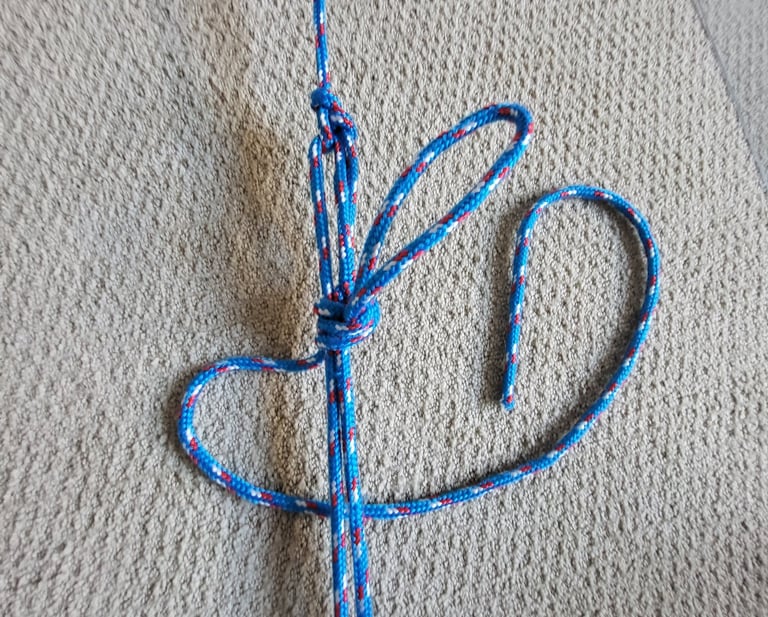
Trucker's Hitch with Span Loop.
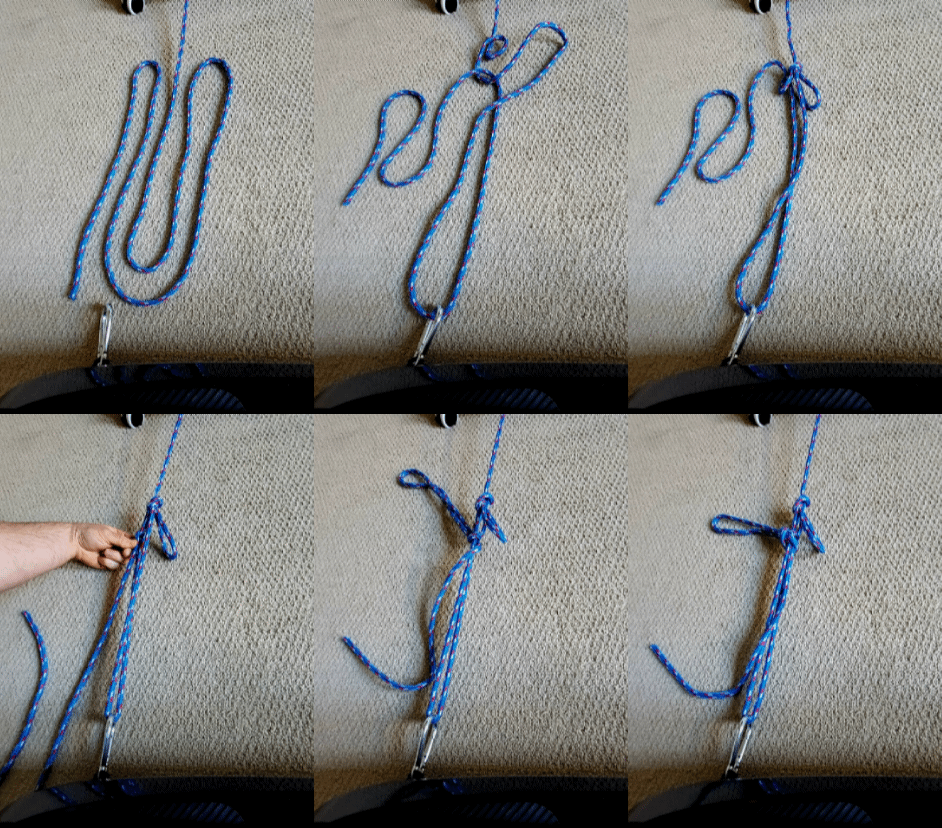
Trucker's Hitch with Bowline Knot.
How to Tie: The Trucker's Hitch
The Trucker's Hitch is a compound knot system, not just a single knot. Follow these steps to set up a high-tension pull:
Anchor the Standing End: Secure your rope to the object you need to move or tension. Use a Schwäbisch Hitch for grabbing cables or pipe, a standard Bowline Knot for fixed structures, or a Running Bowline for cinching around non-symmetrical or large objects.
Establish the Pivot: Wrap the working end of the rope around a smooth, secure structural element (like a conduit run, strut, or pole). This acts as your first "pulley."
Create the Midline Loop: Tie a Span Loop in the main line, positioned between your anchor and your pivot.
Pro Tip: Leave enough "travel" space; the knot will move toward the pivot as you tighten the system.
Feed the Pulley: Pass the working end of the rope through the Span Loop. You have now created a 3:1 theoretical mechanical advantage.
Tension and Lock: Pull the working end back toward the pivot to tighten the assembly. Once the load is tensioned appropriately, lock it in place by pinching the rope where it passes through the midline loop and tie it off securely using two slipped Half Hitches or a slipped overhand knot for a quick release.
Why this setup works:
By using the Span Loop instead of a slip knot, the system won't collapse when tension is released. This allows you to adjust the tension or reuse the same rigging setup across multiple pulls without untying and re-tying your midline loop. And the slipped Half Hitches allow you to preserve all the tension you fought for, while still allowing an easy release when the task is finished.
Mastering the Trucker's Hitch is a game-changer for any electrician who needs to move heavy gear or secure a load with precision. By combining this mechanical advantage system with reliable midline loops like the Span Loop or the Bowline, you ensure your pulls are powerful, professional, and—most importantly—easy to untie when the job is done. For a deeper dive into the essential toolkit every pro should carry, check out my guide on the Top 10 Knots Every Electrician Should Know. Now, get out there, put that 3:1 leverage to work, and tie some great knots!
Safety Disclaimer: ⚠️ Material Handling Only
The knots and techniques demonstrated on this site are intended strictly for material handling, wire pulling, and equipment securement. > Never use these hitches and knots for life safety, fall protection, or overhead lifting of loads where a failure could result in injury or death. Always use OSHA-compliant, load-rated hardware (harnesses, shackles, and slings) for critical lifts. Your safety team is there for a reason—consult them for high-risk tasks. Master the craft, stay out of pinch points, respect the load, and live to tie knots another day.
Questions or tips? Reach out anytime. I would love to hear about new knots and techniques.
Check out my YouTube channel for knot tying, rigging tips, and other electrician related tutorials.
© 2025. All rights reserved.
I made this website by myself with Hostinger Website Builder. Try it and start building your idea, today.